
Trotskyism
TROTSKYISM. American Trotskyism was founded soon after the expulsion of James P. Cannon, Max Shachtman, and Martin Abern from the Communist Party (CP) on 27 October 1928. The three had been leaders of a faction aligned with William Z. Foster. The group viewed itself as a Left opposition to official Communism and devoted most of its energy, particularly in its early years, to a critique of the Soviet Union. These newly-minted Trotskyists held that the Soviet Union had degenerated by becoming bureaucratized under the leadership of Joseph Stalin. They urged a return to the original Leninist regime, which they believed to be more internally democratic and internationally revolutionary. Trotskyism mainly developed in the United States as it did in other countries, that is, in a reactive fashion to what was swiftly becoming Soviet Communism.
American Trotskyists, like their “Stalinist” competitors, sought to replicate on American soil a revolution modeled on the Soviet one. They believed this required the construction of a vanguard party, a tightly organized and disciplined organization sharing the correct view or line. For them, this combination provided the singular key to eventual revolutionary success. Taken together with the badly mistaken expectation that large numbers of Communist Party members would defect to Trotskyist ranks, ideological disagreements over “the correct line” prompted an endemic fractiousness. The Communist Party, barely holding its own until 1935, kept its membership intact by combining the authority of the Soviet Union and a range of sometimes successful efforts at home with an undemocratic internal regime. European-born, blue-collar members in particular remained stolidly loyal to the Party of the Soviet Union and to their own ethnic organizations and foreign-language press. By contrast, Trotskyists paid the price in splits, with a spotty or sometimes scarce working-class following.
The small but determined Trotskyist movement drew from Trotsky the theory of permanent revolution, the transitional program, and the conception of the united front. Trotsky himself insisted that these were not innovations but actually flowed from the broad traditions of revolutionary Marxism, from the Communist Manifesto of 1848 to the first four congresses of the Communist International (1919-1922). This programmatic orientation saw struggles for genuine democracy and for the immediate interests of workers and oppressed people as naturally flowing into a deepening of working-class consciousness and the revolutionary struggle for socialism. It also stressed the need for united fronts of revolutionaries and non-revolutionaries to advance democracy and material reforms, whether in the struggle against fascism or trade union struggles to better wages and working conditions. In all of this, Trotsky emphasized the necessity of political independence of the working class from all capitalist parties, leading toward working-class predominance or hegemony in social struggles, thus tending in the direction of socialist revolution. Finally, the entire programmatic orientation made sense only within an internationalist framework, requiring a global analysis of capitalist realities and a practical coordination of activity consistent with working-class solidarity.
American Trotskyists had sufficient advantages over sister parties in Europe and elsewhere to become the largest and best organized Trotskyist group anywhere during Trotsky’s lifetime. Cannon and his supporters had led a section of the American CP relatively attuned to American political conditions and with deep experience within the American labor movement. A pragmatic tactician, he combined organizational and leadership skills contrasting sharply with the typically small and badly run bands of feuding Trotskyist intellectuals in Europe.
Between 1928 and 1933, American Trotskyism remained extremely weak, with little more than 200 members. Activity consisted largely in publishing and distributing their paper, the Militant, for the most part unsuccessfully to CP-related circles. Also factionally ridden, they were all but paralyzed by internal tension on a leadership level between Cannon and Shachtman. They also suffered two minor but painful splits from groups led respectively by Albert Weisbord, a former Young People’s Socialist League leader who briefly rose to fame as a Communist field marshal in the Gastonia, North Carolina, strike and who continued to direct a minute group for decades after; and by B.J. Field, who had achieved his own fame as Trotskyist strategist of a New York restaurant strike.
During 1933 Trotskyists began to influence the American Left itself through a campaign supporting a united front of Communists and Socialists against the rise of fascism in Germany. American Communists, for their part, blindly echoed the German position, refusing cooperation with the Social Democrats who had so bitterly opposed them for a decade. After 1935, Communist regulars adopted the Popular Front policy and Trotskyists criticized them from the left, particularly their support of the Democratic Party, their de-emphasis of anti-colonial struggles, and their cautious or pragmatic policies within the labor movement.
Thanks to their strategic role in the victorious Minneapolis Teamster strike in 1934, Trotskyists developed a small but vital labor base. At about the same time, the Trotskyist critique of Russian autocracy brought over a number of intellectuals, including an important group around the journal Partisan Review.
Between 1934 and 1938 American Trotskyists went through a process of fusion, entry and split that contributed to the movement’s growth and simultaneously undercut their progress and produced bitterness among others in the non-CP Left. In 1934 Trotskyists fused with the American Workers Party, led by A. J. Muste, a group that had distinguished itself in leading the Toledo Auto-Lite strike. Most of the “Musteites,” including Muste himself, soon walked away from the fusion, feeling manipulated or at least disappointed in the merger. In 1936 Trotskyists entered en bloc the Socialist Party (SP), whose more conservative wing had already departed. An opposition faction around Hugo Oehler opposed the entry and split away to form its own movement with a number of notable organizers and intellectuals, including Sidney Lens. The main body of Trotskyists, conducting a sort of reconnaissance operation, converted several hundred Socialist youth before their expulsion in 1938, leaving behind a shattered Socialist Party. The founding of the Socialist Workers Party (SWP) as the premier organization of the Fourth International followed shortly.
Leon Trotsky himself had meanwhile arrived in Mexico in 1937. The American Trotskyists quickly established a special relationship with their exiled leader, providing the bulk of his secretaries, guards, and funds, and establishing a close practical-theoretical collaboration. American Trotskyist intellectuals, led by George Novack, organized a commission of inquiry into the Moscow trials and convinced the philosopher John Dewey to head it. The commission’s hearings played an important role in efforts to counter Communist versions of the Moscow Trials. The assassination of Trotsky by a Comintern agent on 20 August 1940 delivered a deep personal as well as political trauma to American Trotskyists. Many cadres remaining in the movement for twenty or more years sustained themselves through memories of the “Old Man,” memories often more vivid than Trotskyism’s contemporary activities.
In all, the period of collaboration with Trotsky between 1937 and 1940 had been most productive. Trotskyists developed most of the ideas that have had their impact within the American labor movement, such as advocacy of a shorter work week to counter unemployment, automatic wage escalators to offset inflation, support of rank-and-file democracy in an increasingly bureaucratized labor movement, and promotion of an independent labor-based political party. Actual Trotskyist recruitment of workers and influence within the trade unions, significant for their existing organization size, remained slight when compared with that of the CP in the same period, drawing tens of thousands of working-class supporters to itself through the rise of the CIO and through the success of Popular Front programs among ethnic groups.
Less progress could be registered in recruitment or even understanding of racial minorities and women. Trotsky urged upon his American supporters an aggressive orientation toward African Americans. Articulated by C. L. R. James, the support of revolutionary Black activity found a place in the Trotskyist press but little role in political practice. Likewise and by contrast to the Communist movement, with its own approach to women and success within the Popular Front, American Trotskyists produced little more than an occasional essay urging women’s participation.
In 1940 the Trotskyists split almost in half over the “Russian question.” A group led by Max Shachtman, including most of the prominent intellectuals and most of the youth, developed a new theory of the Soviet Union as a bureaucratic collectivist class society. They refused to defend the Soviet Union and evolved a “Third Camp” perspective of opposition to both Washington and Moscow. Cannon’s faction included most blue-collar workers and a scattering of intellectuals and adhered faithfully to Trotsky’s view of that society as a “degenerated workers’ state” still worthy of defense in a conflict with imperialism. The division separated most intellectuals from most workers, with the result that Shachtman’s Workers Party (WP) achieved a lively but mostly isolated intellectual life while Cannon’s SWP maintained an orthodox if stifling internal life with more working-class participation. During World War II, Dwight Macdonald left Shachtman and published a lively maverick libertarian-pacifist journal, Politics. The Smith Act prosecutions of the SWP leaders and Minneapolis Teamster militants sent important Trotskyists to prison, assisting the union bureaucracy in isolating the movement. Followers of Shachtman, who threw themselves into wartime factory activity, emerged with scattered support in a handful of unions.
Trotsky and both branches of his followers had believed that the war would be followed by a revolutionary wave in which leadership could be seized away from Communists and Social Democrats. The reality of successful revolutions led by the supposedly “counterrevolutionary Stalinists” in China and Yugoslavia, taken together with a relative prosperity and conservatism in the industrialized countries, proved altogether demoralizing. Cannon sought to defy reality with predictions of an imminent revolution, while Shachtman developed frightening visions of a new class system sweeping the world. The confusion led to myriad new splits and recombinations. A small SWP group led by Felix Morrow and Albert Goldman defected to the WP, while the WP “Johnson-Forest” group, led by C. L. R. James and Raya Dunayevskaya, jumped to the SWP. Every grouping lost the bulk of membership as prosperity and McCarthyism took a toll on every part of the Left.
During the 1950s and 1960s, the Shachtman tendency drifted largely rightward under shifting names as Independent Socialist League and Young Socialist League. At first seeking to maintain a course independent of Stalinism and capitalism, it advocated an undaunted, global “Third Camp.” In time, the bulk of the group supported the American camp in the Cold War, abandoned vanguardism, and evolved into liberals with social democratic aspirations. Irving Howe, a former member, in 1953 launched the journal Dissent, which maintained a position of critical support for America’s foreign policy objectives while defending the victims of McCarthyism. In 1958 Shachtman guided his group of little more than 200 members into the Socialist Party, where in 1972 they became the leadership of the small, aging, hawkish, anti-New Left Social Democrats USA. Michael Harrington led a wing of former Shachtmanites that maintained a more critical attitude toward American foreign policy, the Democratic Socialist Organizing Committee. later merged with the New American Movement to form the Democratic Socialists of America, which reached a membership approaching a hundred thousand, but only in the twenty-first century. Hal Draper, longtime editor of Shachtman’s lively tabloid Labor Action, led the majority of the youth back out of the SP in 1964 to form the Independent Socialist Clubs, later called International Socialists and gaining a couple of hundred labor-oriented student supporters. taking up a more radical but almost a more syndicalist version of the Shachtmanite variety of Trotskyism.
The SWP had dwindled down by the 1950s to less than 400 members hard-pressed to maintain a weekly paper and a quarterly journal. The James-Dunayevskaya group left in 1951 with a few dozen adherents, published the syndicalist-minded tabloid Correspondence for a few years, and divided again into Dunayevskaya’s News and Letters and a James-oriented Facing Reality group, neither of them Trotskyist anymore. A further breakaway led by James Boggs and Grace Lee Boggs, renaming itself the National Organization for an American Revolution, survived into the late twentieth century. A faction that emerged in the SWP in 1953 around Bert Cochran, Harry Braverman, and George Clarke and supported by the bulk of Trotskyist-oriented autoworkers, sought a more American and less sectarian political existence and produced its own lively monthly, the American Socialist, which merged into Monthly Review in 1960. The same year, Sam Marcy led out of the SWP a group of several dozen activists, largely from the Buffalo area, who had supported the Russian invasion of Hungary. Calling itself the Workers World Party, the Marcy group developed some strength in the late 1960s through the organization of the ultra-militant Youth Against War and Fascism. In future decades, it would continue to play a sometimes outsize role in the mobilization of antiwar activists.
The evolution of American Trotskyism also continued to be inseparable from the global network established by Trotsky and his co-thinkers in the early 1930s, organized formally in 1938 as the World Party of Socialist Revolution – the Fourth International, designed to oversee and coordinate revolutionary analyses and activism in various countries. Even before Trotsky’s death, significant analytical differences had arisen within the Fourth International over how to analyze the meaning of the consolidation in the USSR of a bureaucratic dictatorship under the Stalin regime. For Trotsky, this was a bureaucratically deformed workers state requiring a political revolution to establish a workers’ democracy that would safeguard and advance the socio-economic gains of the 1917 revolution. Shachtman and others had argued that the Stalinist order represented a new form of oppressive class society, bureaucratic collectivism, no better than the feudalism or capitalism that had proceeded it. A left-wing current around Julius and Phyllis Jacobson, Hal Draper and others broke off from Shachtman in order to launch the influential magazine, New Politics. A fourth position, advanced by C.L.R. James and later by Tony Cliff in Britain, held that the USSR and other Communist dictatorships arising after the World War II, represented a variation of capitalism: state capitalism.
In fact, the post-war period, the anticipated role of the Fourth International in a global revolutionary wave disintegrated, throwing the Fourth International into crisis. Even those who remained, after a few years, fought over what to do with the unanticipated realities. Aspects of the differences re-echoed in new disputes of the 1960s and early 1970s, whether, for example, Trotskyists should adapt to tactics and strategies of guerrilla war in Latin America. These dynamics strongly influenced the evolution and permutations of American Trotskyism, although specifics on the American scene proved no less crucial to such development.
All existing Trotskyist groups grew in the aftermath of the collapse of Students for a Democratic Society in 1969, drawing those attracted neither to the Communist Party nor to Maoism, but attracted to a critical view of Communist-dominated societies and to a rigorous Marxist intellectual life. By 1977, the SWP had more than 1500 members, more than at the time of its founding convention in 1938, but nearly all of them graduates of the student radicalization. Benefitting particularly from the role the SWP and the Young Socialist Alliance had played in building an effective mass antiwar movement, in feminist and anti-racist struggles, the SWP/YSA also attracted many through efforts to popularize the ideas of Malcolm X and Che Guevara, as well as the theorizations of such contemporary Marxists as Belgian economist Ernest Mandel. All this was enhanced by the impressive publication of books and pamphlets by Pathfinder Press, as well as through vibrant weeklies, the Militant and Intercontinental Press, and the monthly International Socialist Review.
Others rejected these initiatives, committing themselves to rebuilding Trotskyism though a stress on orthodoxy, vanguard building, and the labor movement. James Robertson had split from the SWP in 1963 and built the Spartacist League into a group of two hundred or so members, while Tim Wohlforth left the SWP in 1964 and built the Workers League into a group of about the same size with links to the Socialist Labour League, a sizable British group led by Gerry Healy. Both groups opposed the SWP’s identification with the Castro leadership of Cuba. The Seattle SWP branch, led by Richard Fraser and Clara Fraser, strongly oriented toward civil rights and subsequent black struggles, left the SWP in 1964 to form the Freedom Socialist Party, which eventually grew under Clara Fraser’s leadership, with a strong orientation to the feminist movement. The combined membership of these various split-offs was about 3000 by the mid-1970s. As with the SWP proper, the apparent advance in numbers would prove to be a historic high point from which the decline would be swift and final.
Trotskyism of all varieties suffered. The SWP remained the largest Trotskyist group in the early 1980s with the only significant organizational apparatus. Yet a majority of its veterans from the 1930s–1940s had died, resigned, or retired. A newer, younger leadership headed by Jack Barnes initiated dramatic changes that contributed to the decline of the organization. Proclaiming that the American working class was now moving to the center stage of politics, the SWP directed a majority of its members into industrial jobs. This had fewer positive than demoralizing results. Meanwhile, a new turn toward revolutionary ferment in Central American and the Caribbean prompted the leadership to cut the party’s ties with traditional Trotskyism, pulling away from the Fourth International and proclaiming itself “a sister party” of the Cuban Communist Party. These turns, accompanied by a campaign to “tighten Leninist norms,” led to a wave of expulsions of many who questioned the leadership. The SWP’s break from Trotskyism accelerated the party’s decline in activism, influence, and membership.
The dissidents themselves fragmented. Socialist Action, with about 300 members led by Nat Weinstein and Jeff Mackler, sought to replace the SWP as the representative of US Trotskyism with a group soon debilitated by splits, ultimately between its core leaders themselves. The Fourth International Tendency, with a membership never above seventy, emerged in 1983, led by George Breitman and Frank Lovell and oriented toward reforming the SWP and bringing all expellees back into the fold. It dissolved in 1991. Other ex-SWPers joined with remnants of the Independent Socialist Clubs/International Socialists and smaller groups, helping form Solidarity, whose membership never rose above 300, but which maintained the lively journal Against the Current, engaging in a broad range of social movements and helping to sustain the influential trade union monthly Labor Notes. Some former SWPers threw themselves into the short-lived efforts to create a Labor Party, initiated by significant sectors of the trade union Left, spearheaded by Tony Mazzochi of the Oil, Chemical and Atomic Workers union. Raising great hopes far beyond Trotskyist ranks, this project also came to nothing.
Others followed the trajectory of the widely admired and dynamic Peter Camejo, who during 1976 had been the SWP’s most dynamic and effective Presidential candidate, known for his outstanding role in the anti-war movement and other social struggles. By no means opposing a positive orientation to the Cuban and Central American revolutions, Camejo concluded that the methodology of the Barnes leadership was no less stultifying than what it claimed to be replacing. The North Star Network that Camejo helped to organize abandoned any pretense of being “Trotskyist” and usefully supported the radical “Rainbow Coalition” of 1986 that presidential hopeful Jesse Jackson organized within the Democratic Party. Later, Camejo became a major figure in the Green Party, aspiring to build is a more effective and consistently radical force in the United States.
Other groups committed to one or another interpretation of Trotskyism struggled onward with declining numbers. The ideologically unreconstructed Spartacists focused largely on historical details of past factional disputes, and the Workers League renamed itself Socialist Equality Party, focusing largely on extensive commentary through its internet website, widely viewed as combining informative analyses with extreme sectarianism, in some cases popularizing conspiracy theories. Others, comprising organized handfuls, played a similarly modest role in the shrinking Left of the 1990s. Trotskyists groups in other countries, from France to Brazil, sought unsuccessfully to create followings of their own in the United States.
In the twilight of the twentieth century, two new Trotskyist currents appeared on the American. scene, both influenced by British Trotskyism. The first, the International Socialist Organization (ISO) was tied to the British Socialist Workers Party led by the widely admired writers Tony Cliff, Chris Harman and Alex Callinicos. The second, Labor Militant, allied itself to the British Militant Tendency led by Ted Grant, Alan Woods and Peter Taffe. The ISO emerged as a 1977 split-off from the International Socialists. Its monthly tabloid, Socialist Worker, initially mirrored publications of the British Socialist Workers Party, although a rupture of formal relations took place in 2001, ostensibly over how to relate to anti-globalization struggles. The ISO grew from relative obscurity to prominence on campuses and to a lesser degree in unions with its membership exceeding 1,000 over the next decade, making it the overwhelmingly largest body of organized American Trotskyists in more than a quarter-century. The ISO successfully co-sponsored a large annual, nonsectarian gathering of socialists in a several-day Chicago summer educational conference. Participants included a number of well-known figures: actors Wallace Shawn and John Cusack; activist-scholars Tariq Ali and Keeanga-Yamatta Taylor; writers Arundhati Roy and China Mieville; journalists Amy Goodman, Dave Zirin, and Glen Greenwald; and others. Its well-funded press, Haymarket Books, republished socialist classics along with a new line of books in the socialist mainstream, including the multi-volume collected writings of Eugene V. Debs.
Formed in 1986, Labor Militant would soon split after a fissure in its British parent group. Those identifying with Ted Grant and Alan Woods formed the Workers International League, later self-identifying as the affiliate of the International Marxist Tendency, with the publication Socialist Revolution. The larger of the two groups became Socialist Alternative, identifying with Peter Taffe, from whom it would later separate. Attracting several hundred members through activism around such issues as globalization and war, aggressively campaigning for a $15-an-hour minimum wage, Socialist Alternative gained unprecedented visibility in 2013 with the election of its candidate Kshama Sawant to the Seattle City Council.
Both the ISO and Socialist Alternative became active in Occupy Wall Street activities, Black Lives Matter mobilizations, struggles for women’s rights, labor solidarity work, and more. But both were sharply challenged by a sudden and massive surge toward socialist ideas sparked by the dynamic Bernie Sanders campaign for the Democratic nomination for President in 2016. This, in turn, helped generate numerous socialist campaigns on the Democratic Party ballot line, resulting in such victories as that of that of the charismatic New York Congressional Representative Alexandria Ocasio-Cortez. The traditional Trotskyist stance against supporting pro-capitalist parties in the United States, Republican or Democrat, meant that the organizational beneficiary of this remarkable surge would be the Democratic Socialists of America (DSA), which grew from 5,000 in 2015 to 100,000 in 2021. If DSA palpably lacked the discipline of Trotskyist cadre groups, the growth of this new socialist movement recalled the size and geographical spread of the pre-1920 Socialist Party.
The ISO suffered an existential crisis over how to respond to DSA, while an internal scandal enfolded, prompted by the #metoo movement. After an extended controversy, a majority of members voted to dissolve the organization. Many former ISO members individually joined DSA, while others turned to a variety of other activities. By contrast, in 2020, Socialist Alternative announced its intention to join DSA as a group, setting off contradictory speculations on whether this was intended to strengthen DSA or to reignite factional struggles that had long beset the Left.
American Trotskyism has, in sum, been a minority trend within an American Left that has been itself a minority movement. It has had its moments of vitality and made some lasting contributions, both practical and theoretical. In the 1930s, when the CP dominated the Left, Trotskyism represented a lonely and persecuted, if sometimes internally self-punishing, voice of democratic conscience. Within the labor movement, it contributed to the defense of rank-and-file democracy. Largely a movement of organizers and activists, it also generated a significant layer of theoreticians and thinkers, some of whom extended their ideas well beyond traditional Trotskyist boundaries, sometimes grappling insightfully with problems of capitalist society and social struggle. Some critics believe it has hindered itself, even while bolstering its own faith, by a vanguardist concept of party organization. This last concept, where rigidly applied, has forced Trotskyism to fluctuate between permitting a democratic internal life, which sometimes could encourage fracturing, or suppressing internal democracy and becoming intellectually ossified.
Further reading
Alexander, Robert J. International Trotskyism: 1929-1985, A Documented Analysis of the Movement. Durham, NC: Duke University Press, 1991.
Breitman, George, Paul Le Blanc and Alan Wald. Trotskyism In the United States: Historical Essays and Reconsiderations. Chicago: Haymarket Books, 2016.
Camejo, Peter. North Star: A Memoir. Chicago: Haymarket Books, 2010.
Cannon, James P. The History of American Trotskyism. New York: Pathfinder Press, 1944.
Le Blanc, Paul, Bryan Palmer, Thomas Bias, eds. US Trotskyism 1928-1965: Emergence, Endurance, Resurgence. Three Volumes. Chicago: Haymarket Books, 2019.
Wald, Alan M. The New York Intellectuals. Chapel Hill: University of North Carolina Press, 1987.
Wohlforth, Tim. The Struggle for Marxism in the United States. New York: Workers League, 1971.
See also
Book strip #1
Book strip #2
-
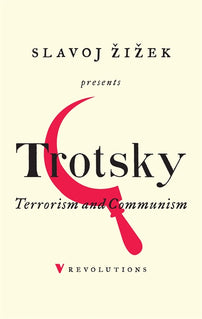 Written in the white heat of revolutionary Russia’s Civil War, Trotsky’s Terrorism and Communism is one of the most potent defenses of revolutionary dictatorship. In his provocative commentary to t...
