We are black, it is true, but tell us, gentlemen, you who are so judicious, what is the law that says that the black man must belong to and be the property of the white man? ... Yes, gentleman, we are free like you, and it is only by your avarice and our ignorance that anyone is still held in slavery up to this day, and we can neither see nor find the right that you pretend to have over us ... We are your equals then, by natural right, and if nature pleases itself to diversify colours within the human race, it is not a crime to be born black nor an advantage to be white.
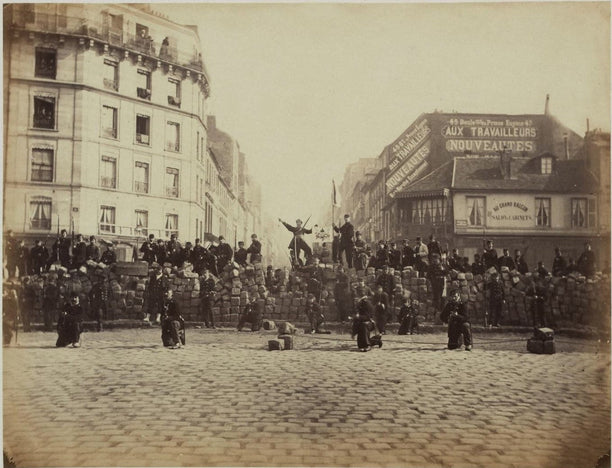
This excerpt is from a letter written in July 1792 by the leaders of the revolution of Haitian slaves. The letter has been republished in the collection of writings of the black leader Toussaint L'Overture, The Haitian Revolution, which includes also the correspondence between him and Napoleon Bonaparte. In the late eighteenth century, Toussaint L'Overture and his supporters established the first black republic in the world.
In the United Kingdom, October is Black History Month. The celebration was originally introduced in 1926 on the initiative of Carter G. Woodson, the editor of the Journal of Negro History. In 2007, no fewer than 6,000 events were held in the UK as part of its programme. Here are some key Verso titles past and present that are relevant to the study and celebration of African and Caribbean history.
Hip-hop music hasn't been this politically urgent or charged with energy since NWA and Public Enemy protested police brutality and told us all to ‘Fight the Power!' in the late 80s and early 90s. Although, if you didn't yet know, it's probably because the rappers of today's protest songs and new faces of popular dissent aren't in New York or LA and are definitely not on MTV, the news or any big music blogs. They are, instead, central figures in the global protest movements that have been sweeping through both the Arab and African worlds over the past year.
In today's New York Times, Sujatha Fernandes, author of Close to the Edge: In Search of the Global Hip Hop Generation, had an illuminating op-ed piece on this nascent phenomenon, highlighting the crucial role that hip-hop is currently playing in galvanizing global revolutions. Whether it is by calling out repression and corruption, sustaining the popular energy of the movements or, in some cases, even helping promote community development and political alternatives, hip-hop has been instrumental in the ousting of repressive regimes and dictatorial control.
She writes,
In the days since the UK riots, there's been a strand of commentary lamenting the lack of a musical backdrop equivalent to punk in the 1980s. Last week, Krissi Murison of the NME wrote in the Guardian:
"They [punks] talk of the boredom of living in the council high-rise blocks, of living at home with parents, of dole queues, of the mind-destroying jobs offered to unemployed school-leavers. They talk of how there is nothing to do."...
If that was punk's manifesto in 1976, then here's the closest thing music has to one in 2011: Kill People. Burn Shit. Fuck School. It's a song by Odd Future Wolf Gang Kill Them All, whose apathetic anarchy is perhaps a more fitting, if unwitting, soundtrack to the riots of last week than the Clash's...This, though, is apparently what rebellion sounds like in 2011: dead-eyed, mob-like and opportunistic. There's certainly no one else currently trying to articulate anything more meaningful in pop culture.
It's a strange choice of example. Odd Future's nihilistic art-rap is a million miles from the buzzing UK hip hop and grime scenes. While it is easy to underestimate the importance of music outside one's own scene or era (and while Murison has a point about the state of much mainstream music) you really don't have to look far to see that there is a wealth of political expression happening in UK music.