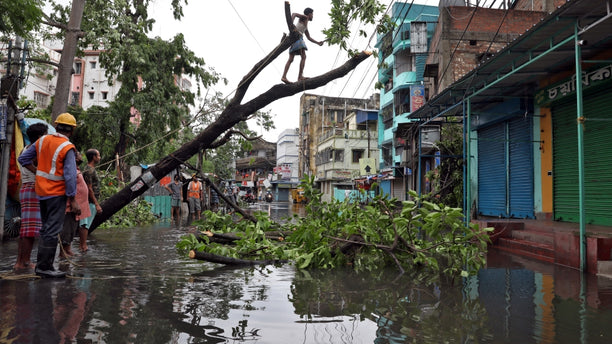
Hunger, or The Social Logic of Climate Breakdown
Aranyo Aarjan writes about the situation in West Bengal following Cyclone Amphan
Aranyo Aarjan writes about the situation in West Bengal following Cyclone Amphan
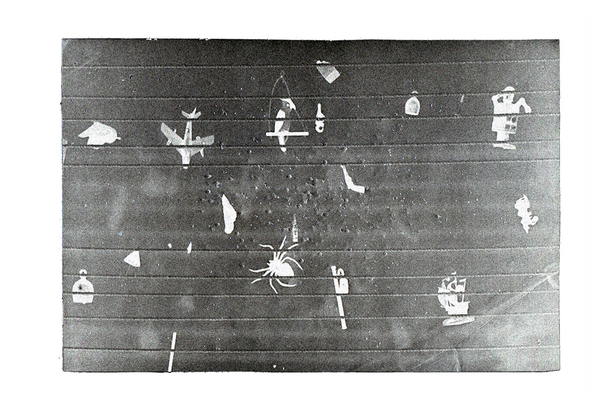
Fredric Jameson demonstrates that it is the moment of reification which enables the emergence of commodification as such; or to put it the other way around, the existence of a tendency to commodification is then what motivates reification and encourages its influence in all kinds of areas (the psychic and the cultural, for example) in which it did not previously hold sway or seem applicable.
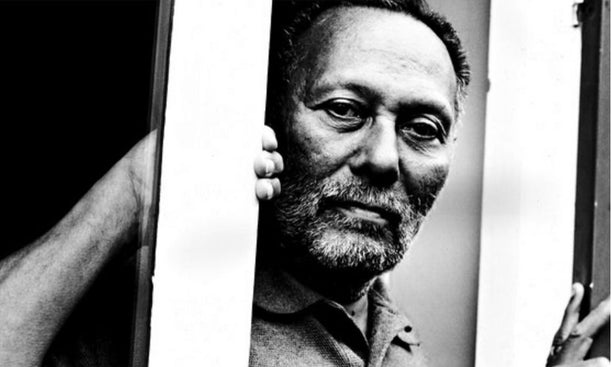
In this essay from 1987, Stuart Hall reflects on Labour's defeat and outlines the ideological basis of Thatcherism's electoral triumph.

To celebrate The World Transformed 2020 programme we're offering 50% off our essential socialist books of the moment!

An update on workplace safety practices and business during COVID-19 from our UK printer.
In the latest issue: Göran Therborn on the global middle classes, Lola Seaton on eco-nationalism and more

Judith Butler speaks to Alex Doherty about her new book, The Force of Nonviolence.

While 2020 has assaulted an already beleaguered City University of New York with a range of new challenges, the university system is also transforming into a veritable laboratory for different liberation strategies.

Leisure and work and ‘private life’ make up a dialectical system, a global structure. Through this global structure we can reconstruct a historically real picture of man and the human at a certain step in their development: at a certain stage of alienation and disalienation.

McKenzie Wark, author of Sensoria, discusses algorithmic injustice, racial capitalism and Afropessimism alongside the work of Jackie Wang.

On the publication of a new collection of writing, John Howe recalls his encounter with the father of AfroBeat at the Shrine, Lagos.

The crisis caused by the coronavirus pandemic has revealed major flaws in the nature of the British state – and the left's thinking on state power as well. In this article, Christine Berry argues that what is required is a new, democratic conception of state power as a way out of the crisis.