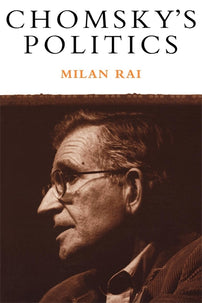
Chomsky, Noam
CHOMSKY, NOAM (b. 1928). In the 1960s–1980s arguably the foremost public, radical critic of U.S. foreign policy and the ideological system that supports it, Noam Chomsky has also become one of the most hated radical writers of the era. He was a veritable symbol for the “Vietnam Syndrome” of popular revulsion at U.S. intervention into and subversion of the Third World.
A Depression child of liberal, Zionist parents, Chomsky attended the University of Pennsylvania, from which he gained a Ph.D. in 1955, and studied linguistics with Zellig Harris. Vaguely anarchistic (or anti-Leninist) in orientation, he lived in an Israeli kibbutz in 1953 and planned a long-term settlement but abandoned the idea. He emerged during the later 1950s and 1960s as perhaps the most internationally famous linguistic theorist, literally changing the nature of linguistic study from classification of speech elements to a major challenge of behavior science models. His “generative grammar,” explained in Syntactic Structures (1957) and other works, has been widely called the “Chomskyan Revolution” in thought.
Chomsky was first drawn into public political debate by the Vietnam War. His writings on Indochina, especially American Power and the New Mandarins (1969), were among the most rigorous and well documented of any written for a general audience. He became an important political speaker, particularly but not only in the Boston area. He also became a figure much admired by the New Left because of his uncompromising moralism and his anarchist-influenced sense of social alternatives. His sympathetic treatment of the Asian revolutionaries inspired special admiration among blossoming New Left Asian scholars. It also inspired hatred in the White House (he was placed on Nixon’s “Enemies List”), and the beginnings of attacks upon him from Cold War liberals who viewed his sympathy for American foes as proof of his “totalitarianism.”
As the Vietnam War wound down, Chomsky turned his attention to the roots of foreign policy, the dynamics of the Cold War, and the role of the intelligentsia. While he followed other Left scholars in an examination of unequal exchange and U.S. support to Third World dictatorships, Chomsky offered original insights into the logic and role of the state in decisively reducing human rights. Next, Chomsky examined the sources of the Cold War, arguing that it was in fact functional for the superpowers both as a means of popular mobilization and (particularly in the United States) a technique of economic management. He also sought to define precisely the content and limits of the doctrinal system to which all “responsible” criticism of U.S. foreign policy must conform—that is, the assumption of American good intentions and the ascription of accompanying atrocities to error rather than modus operandi.
With Towards a New Cold War (1982), Chomsky had become a pariah of neo-liberalism, especially Jewish neo-liberalism. Chomsky’s entanglement in a freedom-of-expression case involving a French scholar whose work denied the Holocaust offered the New Republic among other journals the opportunity to attack Chomsky as an enemy of Western values and of Jewish life. He ceased to be invited as contributor to major liberal outlets, and reviews of his books from those outlets virtually disappeared.
Chomsky’s attention to the Middle East and Central America has deepened both admiration for him on the Left and hatred of him in neo-liberal circles. As an adamant critic of existing Zionism who views liberal intellectuals’ uncritical support of Israel as similar to uncritical support of Stalin’s Russia in the 1930s–1940s, he has been fearless. As a supporter of Third World causes in the face of post-1960s apathy and repugnance, he has been unbendingly strident. As a radical scholar with roots in the anarchist, moralist critique of the security state, he has remained unique.
During the 1980s and 1990s, Chomsky gradually became a kind of underground figure of resistance, his work utilized by environmentally oriented rock bands abroad (especially in Australia) even while steadily ignored by the New York Times. Even in large sections of the international Jewish community, where he had been caricatured as a self-hating Jew, his life’s work and moral commitment have gained grudging respect.
A persistent focus of Chomsky’s criticism has been the corporate media. His 1987 book Manufacturing Consent (co-authored with Edward S. Herman) developed the argument that the commercial press could impose ideological conformity more effectively than a party-run or state-run press because its message would not have been delivered in the form of official pronouncements and censorship. A frequent observation of his is that those who watch TV news are less well informed about current events than those who do not watch it.
After 2000, his critique of Israel became more mainstream, not because it changed but because the objective situation evolved. He continued to advocate a “two-state” solution (the official U.S. position) long after the conditions for its implementation had been destroyed by ever-deepening Israeli occupation of the West Bank.
Chomsky’s authority on issues of U.S. foreign policy gave him a frequent platform not only on college campuses, but also as an interview guest on Alternative Radio (with David Barsamian), Democracy Now! (with Amy Goodman), and Truthout (with C.J. Polychroniou). His comments extended also to economic issues and, increasingly, to environmental issues as well. To all these topics he brought an approach that, while well informed by mainstream sources, debunked official claims with a directness that, as he himself put it, could be easily understood by anyone capable of even the most basic reasoning.
At the same time, he steered clear of controversial investigative issues involving the “deep state.” He either ignored them or, in the case of the assassination of President Kennedy, sought to dismiss evidence of CIA involvement by arguing that Kennedy did not have the “subversive” (peacemaking) intentions that his domestic enemies attributed to him.
Environmental devastation would in the end become Chomsky’s deepest concern. With the Trump presidency, Chomsky’s target became not just routine imperial highhandedness but, in his terms, the most criminal and most dangerous ruler in human history. While Chomsky continued to support a progressive policy agenda, his orientation became more defensive than proactive. In 2020, he co-endorsed, with a roster of well-known Establishment figures, a letter on “Justice and Open Debate” which took aim at a supposed new conformity arising from the massive popular reaction against police murders and the lingering symbols of slavery.
On balance, however, Chomsky can be credited with having raised awareness on key issues and with showing that widely available sources, if read critically, can lead to conclusions that challenge the dominant paradigm.
Further reading
Chomsky, Noam. The Chomsky Reader. New York: Pantheon, 1987.
Chomsky, Noam. Language and Politics. Edited by C. P. Otero. Montreal: Black Rose Books, 1989.
The Noam Chomsky Website. Chomsky.Info. https://chomsky.info
Book strip #1
Book strip #2
-

Lives on the Left
Contributions by Adolfo Gilly, Akira Asada, David Harvey, Dorothy Thompson, Ernest Mandel, Georg Lukács, Giovanni Arrighi, Hedda Korsch, Jean-Paul Sartre, Jiri Pelikan, João Pedro Stédile, K. Damodaran, Luciana Castellina, Lucio Colletti, Noam Chomsky and Wang Hui
Edited by Francis Mulhern
The extended critical interview is especially flexible as a form, by turns tenacious and glancing, elliptical or sustained, combining argument and counter-argument, reflection, history and memoir w...
